Pain, Clicking, and Feeling Unstable After Latarjet Surgery
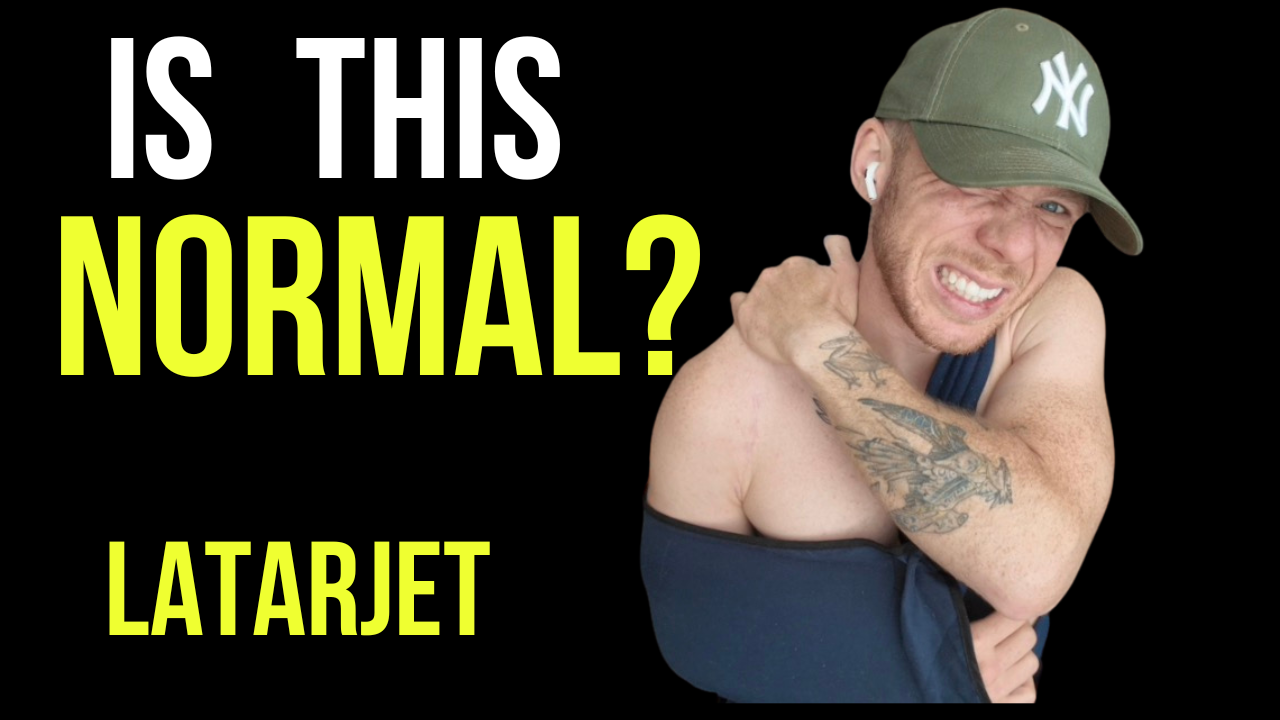
Pain, clicking and feelings of instability.
Here is what actually is going on
Voor Nederlands, KLIK HIER
If you're post-Latarjet surgery and you're dealing with pain, clicking, popping, rubbing, or that unsettling feeling like your shoulder might just give way again, this is for you.
I've been getting messages from people in the first days, the first weeks, the first months after surgery. And they're all experiencing the same things. The pain. The instability. The fear that something went wrong. So I want to address all of it, because I've been through this myself and there are some things you really need to understand.
Your Shoulder Has a Completely New Architecture
The Latarjet is not just "a surgery." A lot of people think they moved a little piece of bone and now your shoulder is fixed. That's not really what happened.
Yes, they moved a piece of bone. But tendons are attached to that bone. Muscles are attached to that bone. Everything has shifted from its original position. Which means your shoulder now has a completely new way of operating, a totally different architecture.
Your body and your brain have to learn to work together again. The whole dynamic of the shoulder has changed, and that collaboration between your mind and your body takes time. It takes weeks. It takes months. That's also why the full recovery window is anywhere between 3 and 12 months, depending on your age and your physical condition.
So when you feel like something is off, that's because structurally speaking, everything is different now. But different doesn't mean damaged.
Clicking, Popping, and Rubbing Is Normal
A healing shoulder is often a noisy shoulder.
The popping, the clicking, the feeling that something is rubbing, none of that automatically means something is broken or screwed up. Think about what's happening inside: moved tendons, moved muscles, scar tissue, a hematoma, healing fluid. There is a lot going on in there right now. Of course things are going to make noise.
I had it myself. I even fell against my shoulder at one point. And listen, this is bone on bone, held together with two screws. You're not going to create serious damage from a sneeze. I know it feels like you might. But the construction is strong.
Be careful, yes. Don't do anything reckless. But clicking and popping and all those strange sensations are part of the process. It doesn't mean you broke something.
Your Brain Hasn't Caught Up Yet
Here's something nobody really talks about, and I think it's one of the most important things to understand.
Even after the surgery, your brain still thinks your shoulder is unstable. It's still running the old programming. Before the surgery, your shoulder was dislocating. Your brain learned to protect it. And it doesn't just switch that off the moment you wake up from the operation.
So that feeling of insecurity, that feeling like it's going to dislocate again, that's real. You're not making it up. You're not being paranoid. But a lot of what you're experiencing is your mind still operating from patterns it built before the surgery. Rationally knowing you had the operation doesn't automatically update the brain's protective response. That takes time too.
I had that feeling at the start. That sense of instability. It goes away. But you have to give it time.
When Should You Actually See a Doctor?
I did a survey with about 20 people who had Latarjet surgery. Around 95% of them said they didn't experience a lot of pain. Most reported a maximum of five out of ten on the pain scale in the first two weeks. Some pain is normal. A little pain is expected. But if you're experiencing serious pain, go see a doctor. Don't wait.
And honestly, even if you're not in serious pain but something just feels wrong, go. Contact your surgeon, your physio, whoever you can reach. I know it's not easy in every country. It's not always easy for me either. But if your gut is telling you something is wrong, follow that instinct and get it checked.
This post is not a replacement for medical advice. It's here to help you understand what's normal so you don't panic when you don't need to. But if something feels seriously off, get eyes on it.
You Can't Rush This
The healing takes time. The physical healing, yes. But also the mental part: the rehabilitation, the regaining of confidence, the process of your body and brain getting back on the same frequency.
You can support it. Doing prehab before surgery matters. Eating well matters. Supplements can help. But there is still a healing curve, and you cannot shortcut your way through it.
Prepare yourself mentally. Find things to fill the time. A language you've wanted to learn. Books you've been putting off. Movies, series, games, whatever it is. Don't just sit there staring at your shoulder, counting the days. That makes it harder. Fill your time with good things.
The Bigger Picture
You made a decision. A hard decision. You chose short-term sacrifice for long-term improvement. Whether that's getting back to sport, living without the constant fear of dislocating, or just being able to be present with your family without thinking about your shoulder, that decision was worth it.
This is also a life lesson. If you want something in the future, you have to make the sacrifice now. It doesn't change. It takes time and it takes commitment.
The emotions, the anxiety, the fear, the frustration, they can be there. You don't have to fight them. Feel them. But don't let them define your recovery. Go outside, walk in nature, be with people you love. Distract yourself with good things.
You're not alone in this. There's a whole community of people going through the exact same process. You can check my Youtube channel and communicate with lots of people who have done the surgery :)
Want Structured Support for Your Recovery?
If you're looking for something more than just videos and articles, I built a full Latarjet recovery program together with my physiotherapist.
It includes my personal story, a structured exercise library with video demonstrations to rebuild your strength and range of motion, and all the practical information you need to navigate the post-surgery period with more clarity and confidence.
It's designed for people who want to take their recovery seriously without having to figure everything out on their own.
You can find the program through the link below. And if you have any questions before purchasing, feel free to reach out. I'm happy to help you figure out if it's the right fit for where you are in your recovery.
Stay blessed by the best. Healing is coming. Be patient with yourself. You've got this.
Dylan
Youtube Video: FAQ session with my physiotherapist